
Taking an Advanced Placement (AP) Science course like Biology or Chemistry is a fantastic way to prepare for
college, but many students quickly realize that the strategies they used in previous science classes are no longer
enough. You might walk into a test feeling like you know the content perfectly, only to find that the test questions are
much harder than you anticipated. This is a common hurdle, and the key to overcoming it is changing the way you
study.
The biggest mistake students make in AP sciences is relying on simple memorization. While knowing the vocabulary
and basic concepts is the foundation, the AP exam doesn’t just test what you know—it tests how well you can apply
that knowledge to new, complex scenarios. To succeed, students must learn to decode multi-layered exam questions,
analyze data, and connect different biological or chemical systems together.
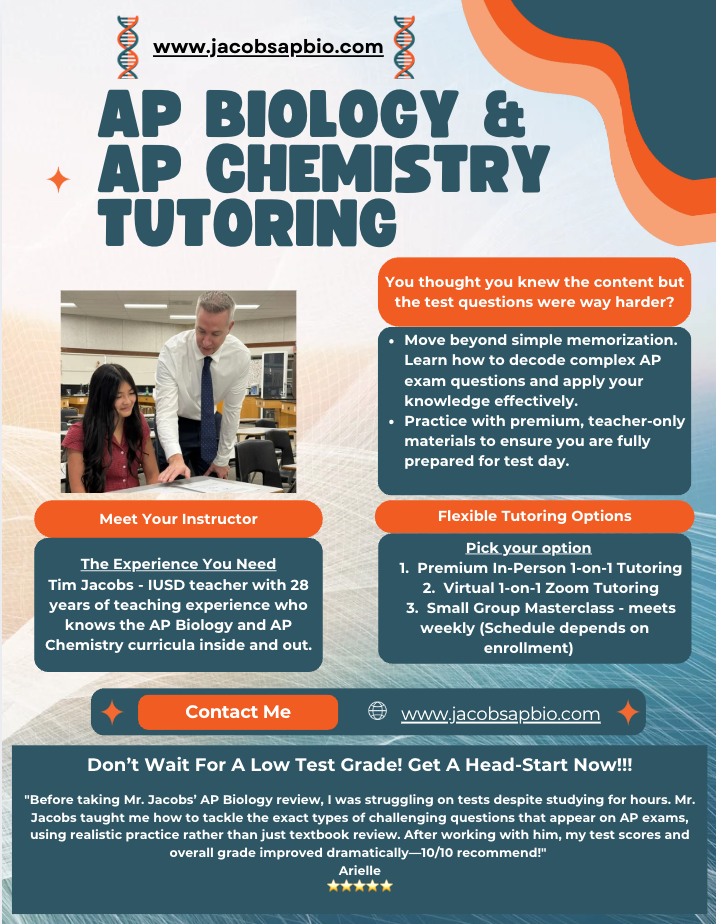
Practicing with realistic, high-level questions is the only way to build this skill. Textbook reviews alone simply will not
cut it. By using premium, teacher-only materials, students can train their brains to recognize the patterns in AP
questioning and approach their exams with confidence rather than anxiety. Realistic practice turns abstract concepts
into concrete understanding.
With 28 years of teaching experience within the IUSD, I have seen exactly where students stumble and, more
importantly, how to guide them past those roadblocks. Whether through premium in-person tutoring, virtual 1-on-1
sessions via Zoom, or weekly small group masterclasses, getting specialized support early in the school year can
make all the difference. Don’t wait for a low test
www.jacobsapbio.com